Creative Operations Workflow Improvement
Good Promotions | Systems Implementation, SOP Documentation, Training & Production Workflow
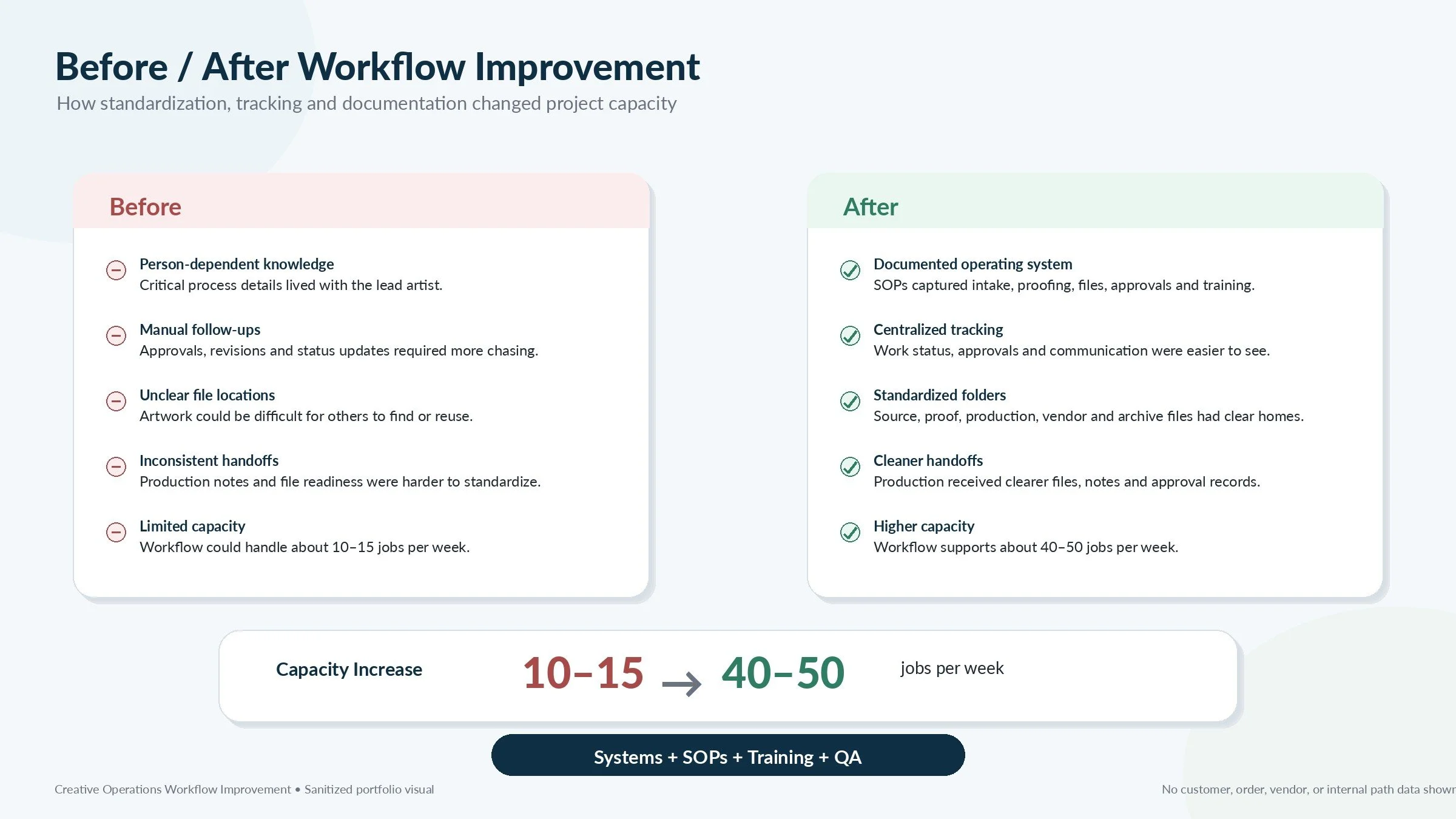
Improved weekly project capacity from approximately 10–15 jobs per week to 40–50 jobs per week by implementing workflow systems, standardizing handoffs, documenting Art Department processes, and building a repeatable training system for new artists.
Project Management Snapshot
Scope: Creative operations improvement initiative across art intake, proofing, revisions, approvals, production file setup, vendor coordination, department handoffs, file organization, SOP documentation, and artist training.
Role: Creative operations lead, Art Department lead, systems implementer, SOP owner, trainer, and project workflow coordinator.
Teams/Partners: Art Department, Front Office, Admin, Embroidery, Signs, Screen Printing, production teams, vendor partners, management, and remote/hybrid team members.
Key Responsibilities: Implemented workflow systems, standardized project tracking, documented SOPs, created onboarding and training materials, improved file naming and archive standards, developed quality control checklists, coordinated cross-department handoffs, and trained artists on repeatable workflows.
Outcome: Increased weekly project capacity from approximately 10–15 jobs to 40–50 jobs while improving visibility, consistency, documentation, onboarding, communication, quality control, and production readiness.
What I Built
I built a more repeatable Art Department operating system by combining workflow tools, project tracking, SOP documentation, training materials, file organization standards, quality control checklists, and clearer approval/handoff rules.
• Implemented Printavo and Connecteam to improve project visibility, workflow tracking, team communication, and remote/hybrid collaboration.
• Standardized art intake, proofing, revision tracking, production file setup, vendor handoffs, and file organization.
• Created an Art Department SOP manual documenting the workflow from customer request through production handoff.
• Built training guides, onboarding curriculum, and tutorial resources to help new artists ramp into the role more efficiently.
• Developed quality control standards for proofs, production files, approvals, file naming, and handoffs.
• Coordinated work across Art, Front Office, Admin, Embroidery, Signs, Screen Printing, and vendor partners.
• Managed and organized a large-scale Dropbox archive containing 1M+ art files.
• Trained 10+ artists and led a team of up to 4 designers.
The Challenge
As project volume increased, the Art Department became a critical operational hub between customers, front office, admin, production departments, vendors, and management. Much of the department’s process knowledge lived with the lead artist, creating risk when that person was unavailable and making training, handoffs, file location, approvals, and production readiness harder to standardize.
SOP Documentation & Knowledge Transfer
To make the workflow sustainable, I created an Art Department SOP and training system designed to reduce single-person dependency, improve consistency, support faster onboarding, and make repeatable production workflows easier to teach, follow, and maintain.
The SOP documented:
• Art request intake and readiness standards
• Printavo workflow and status control
• Daily prioritization and work management
• Proofing and customer approval process
• Revision management and version control
• Production file setup requirements
• Dropbox file management and naming standards
• Proof and production quality control checklists
• Communication standards across departments
• Troubleshooting and escalation rules
• New artist onboarding and training expectations
• SOP maintenance, review cadence, and governance
Training & Onboarding Program
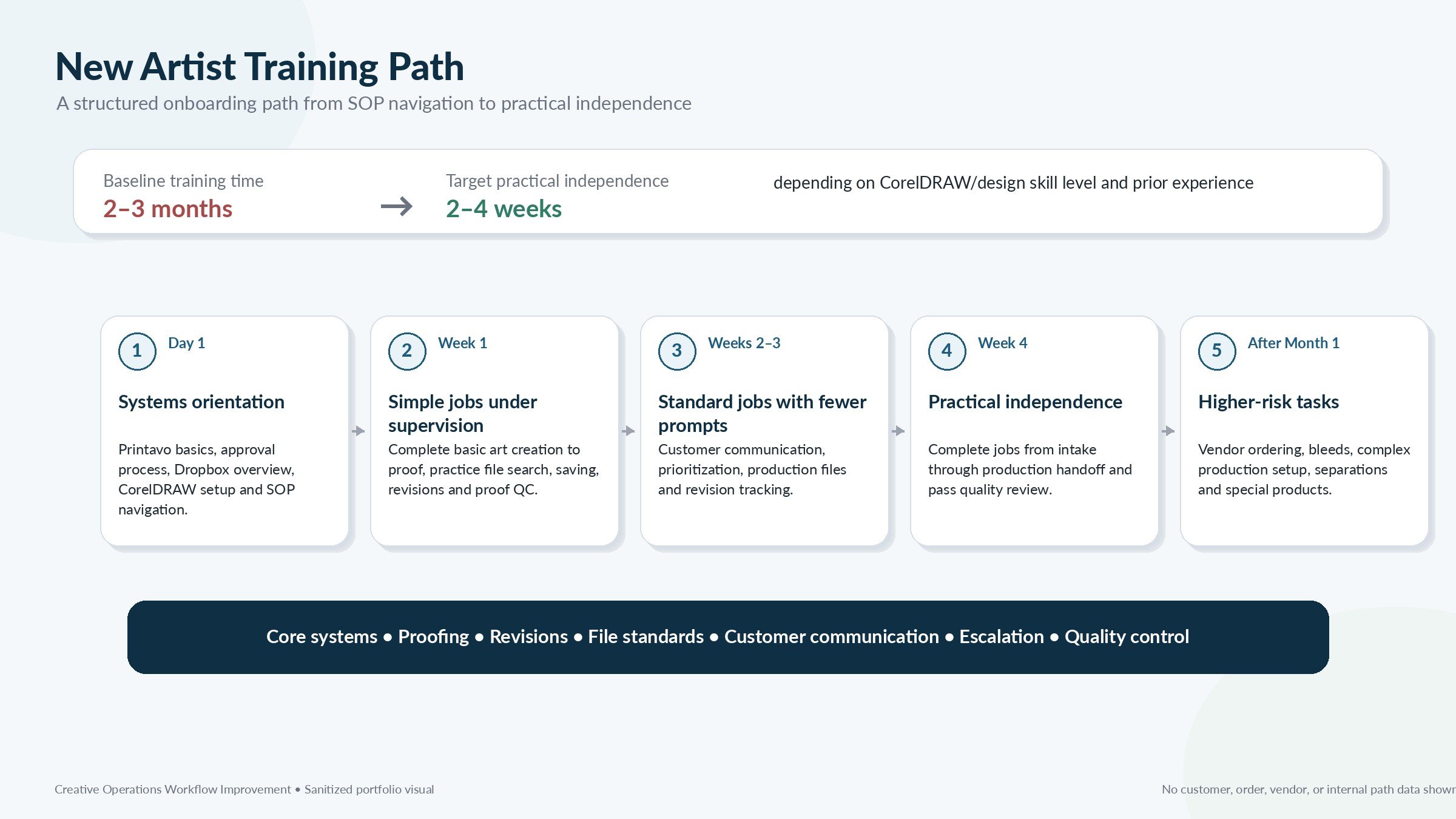
Training path:
• Day 1: Printavo basics, proofing process, Dropbox overview, CorelDRAW setup, shortcuts, and SOP navigation.
• Week 1: Simple jobs from Art Creation to proof under supervision.
• Weeks 2–3: Standard jobs with fewer prompts, including customer communication, prioritization, production files, and revision tracking.
• Week 4: Work toward practical independence by completing jobs from intake through production handoff and passing quality review.
• After Month 1: Higher-risk tasks such as vendor ordering, bleeds, complex production setup, screen print separations, and special products.
The training system was designed to help new artists move from basic system familiarity to practical independence faster. The onboarding plan covers Printavo basics, art approval, Dropbox navigation, CorelDRAW setup, proofing, revisions, quality control, production file setup, customer communication, prioritization, and escalation.
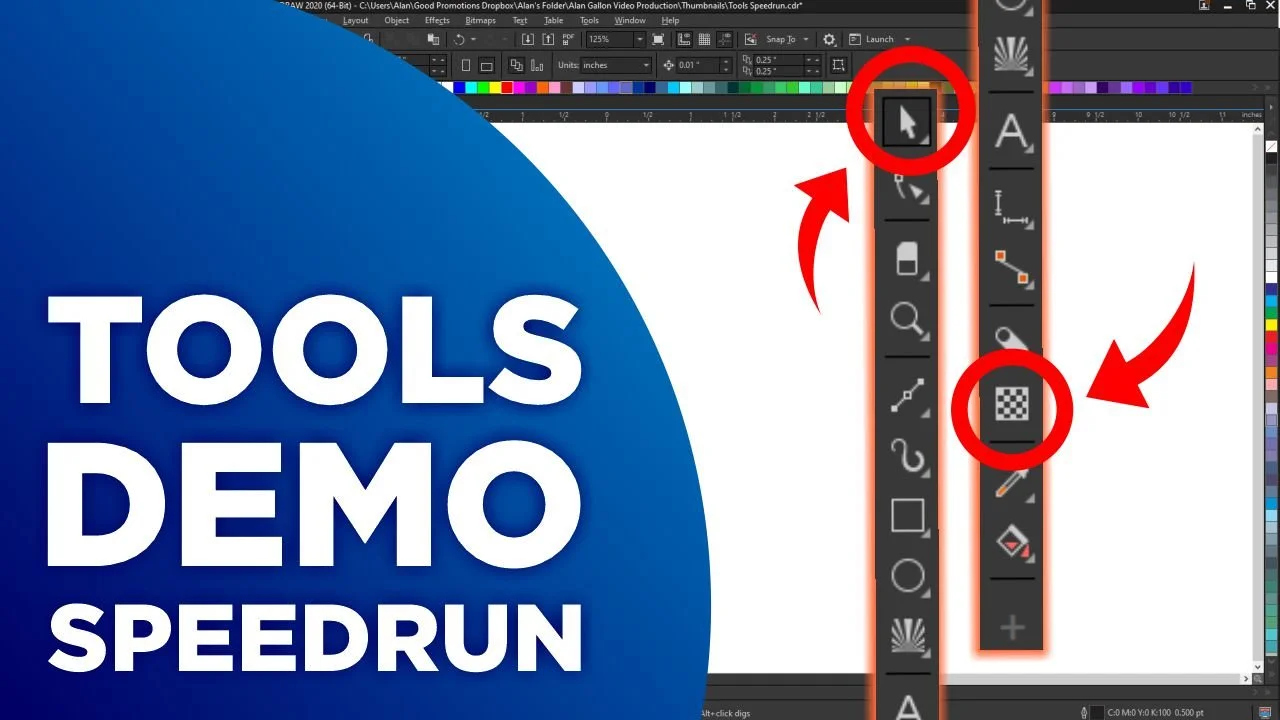
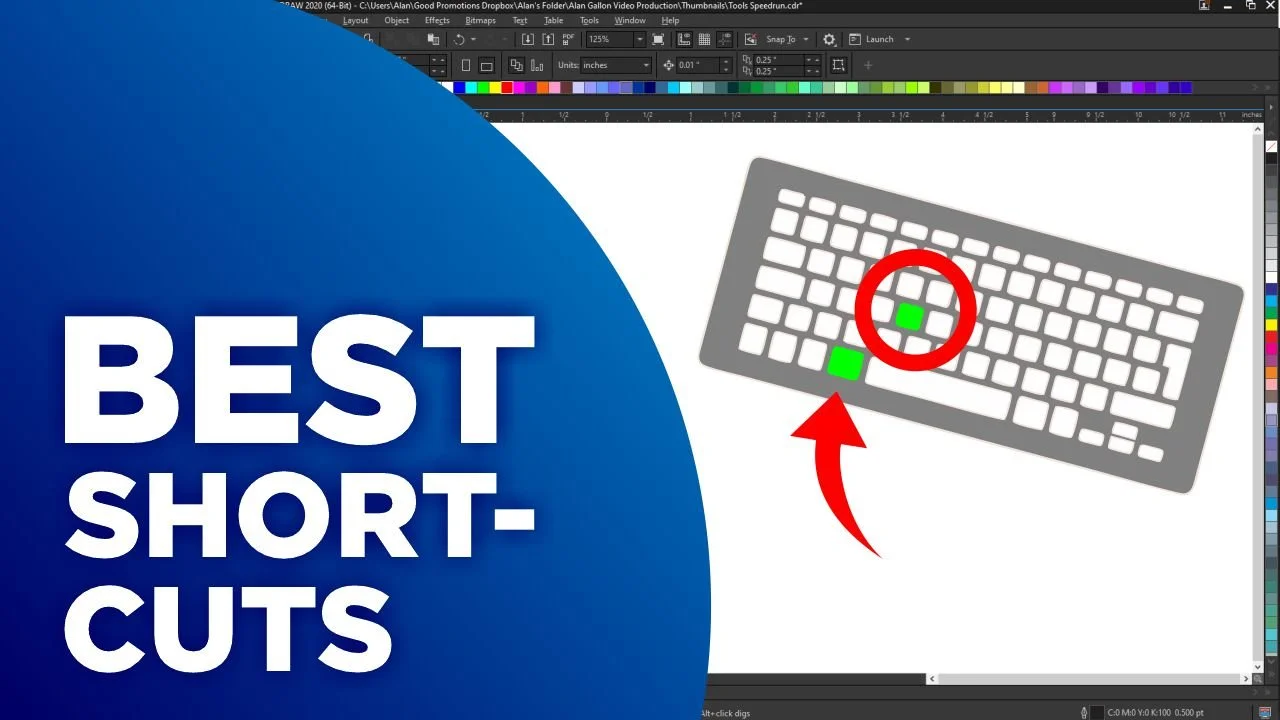
*Sample Training Resources:
Public examples of workflow and technical training resources I created. Internal SOP videos and company-specific training materials are not published for confidentiality reasons.
Quality Control & Risk Reduction
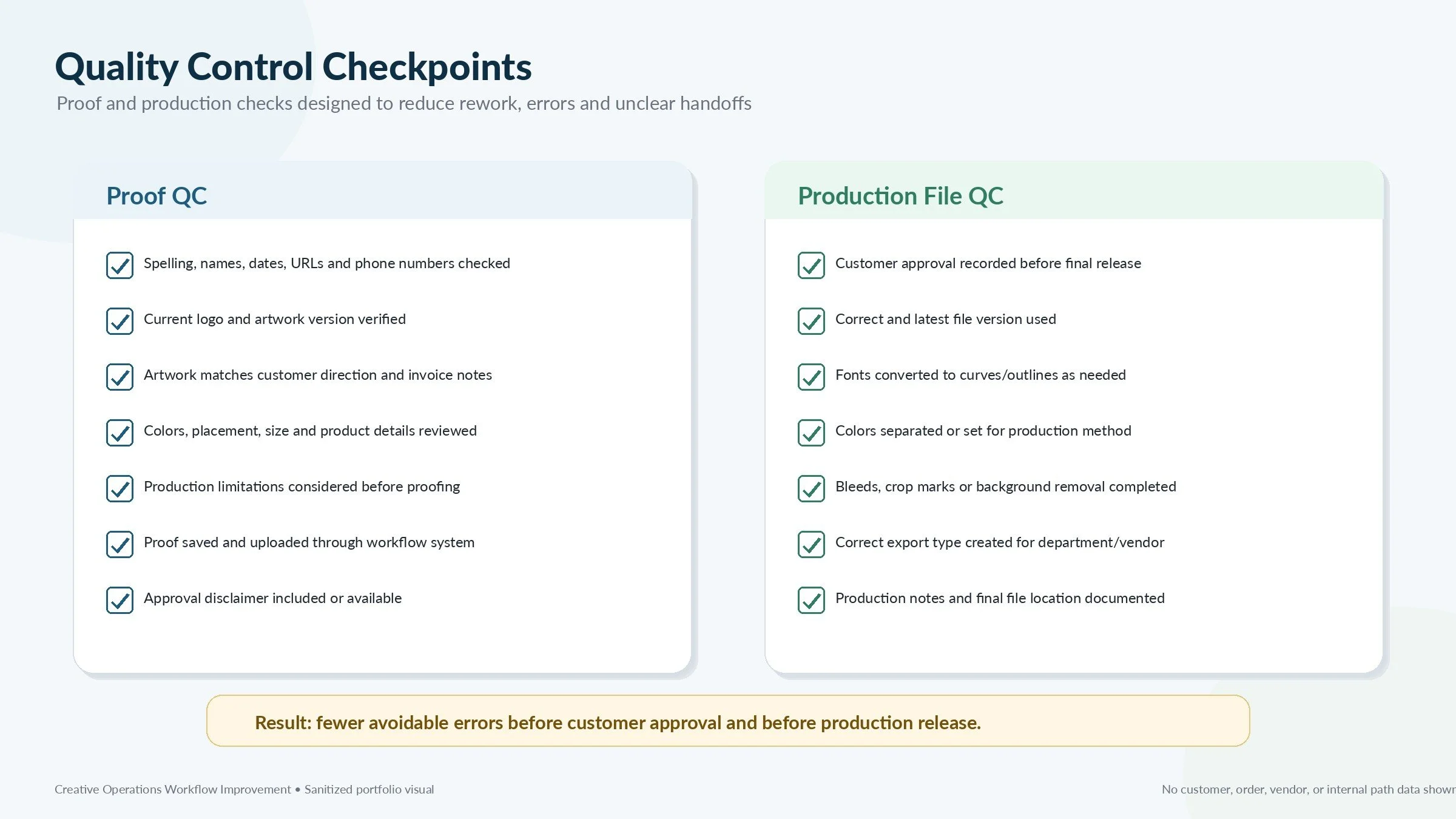
The SOP added quality control checkpoints to reduce avoidable errors before customer approval and before production release. These checkpoints helped standardize spelling checks, logo accuracy, customer notes, colors, placement, product details, production limitations, file naming, approval documentation, and final production readiness.
File Management & Version Control
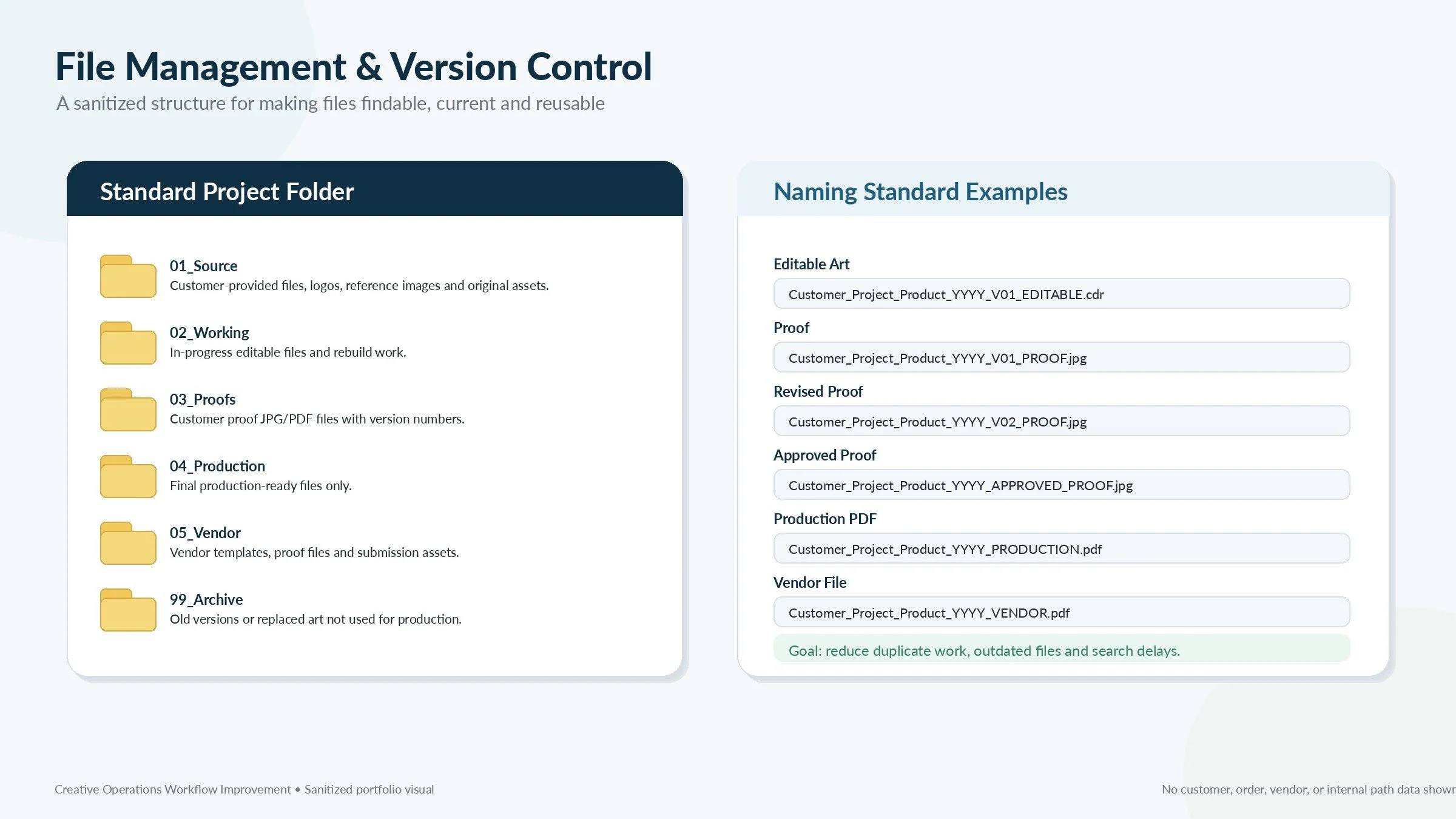
To make files easier to locate, reuse, and hand off, I standardized file organization, folder patterns, project subfolders, proof versions, approved files, production files, vendor files, and archive rules. The goal was to reduce duplicate work, prevent outdated files from being used, and make current artwork findable by any trained team member.
Results
Workflow improvements increased weekly project capacity from approximately 10–15 jobs per week to 40–50 jobs per week, while improving visibility, handoffs, communication, onboarding, documentation, quality control, and production readiness across departments.
• Weekly project capacity increased from approximately 10–15 jobs to 40–50 jobs
• Estimated weekly art request volume: approximately 25–50 requests
• Training baseline identified at approximately 2–3 months
• SOP/training target set at approximately 2–4 weeks to practical independence
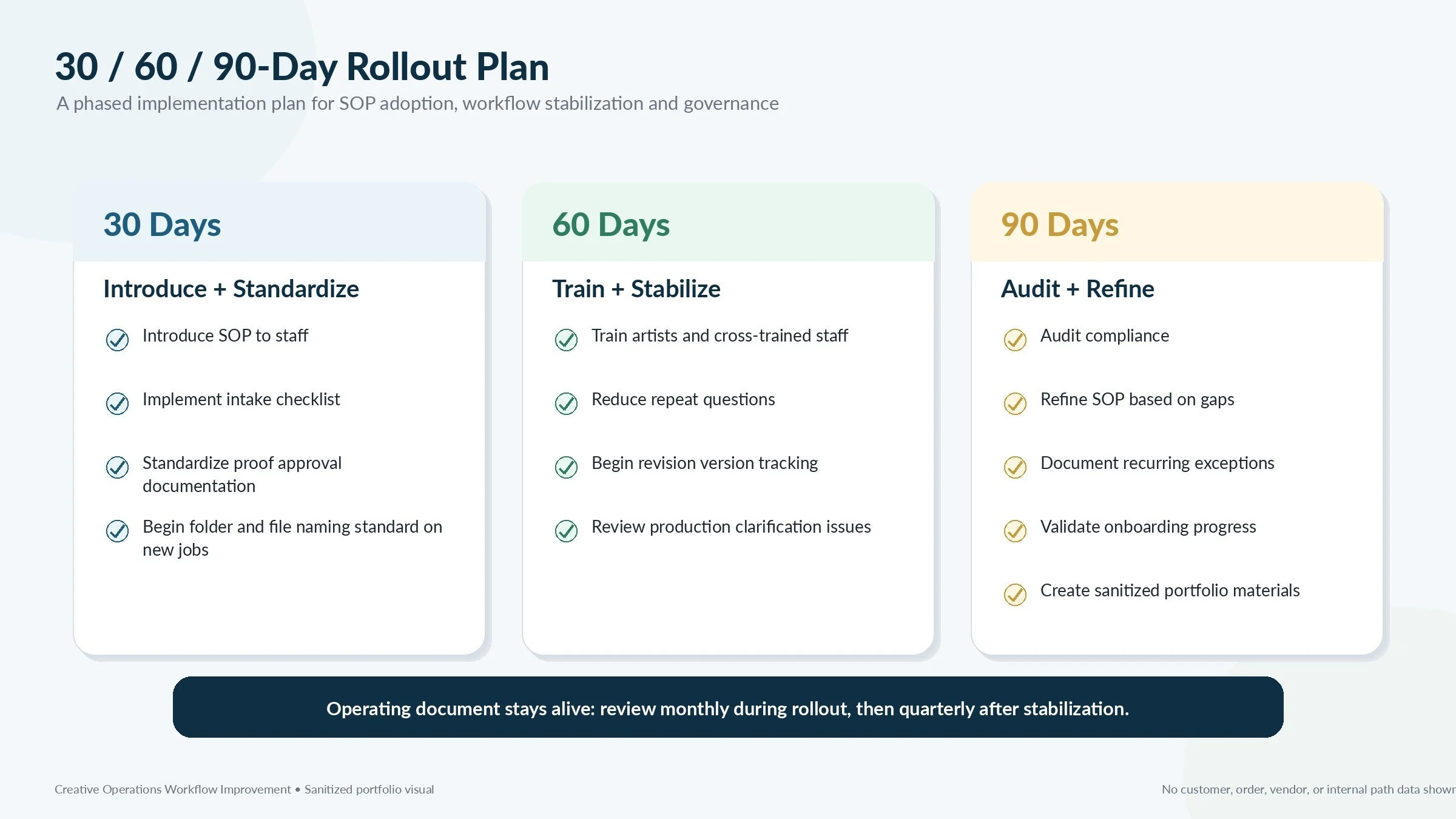
• 30/60/90-day rollout plan created for intake, proofing, file naming, training, revision tracking, compliance audits, and sanitized portfolio materials
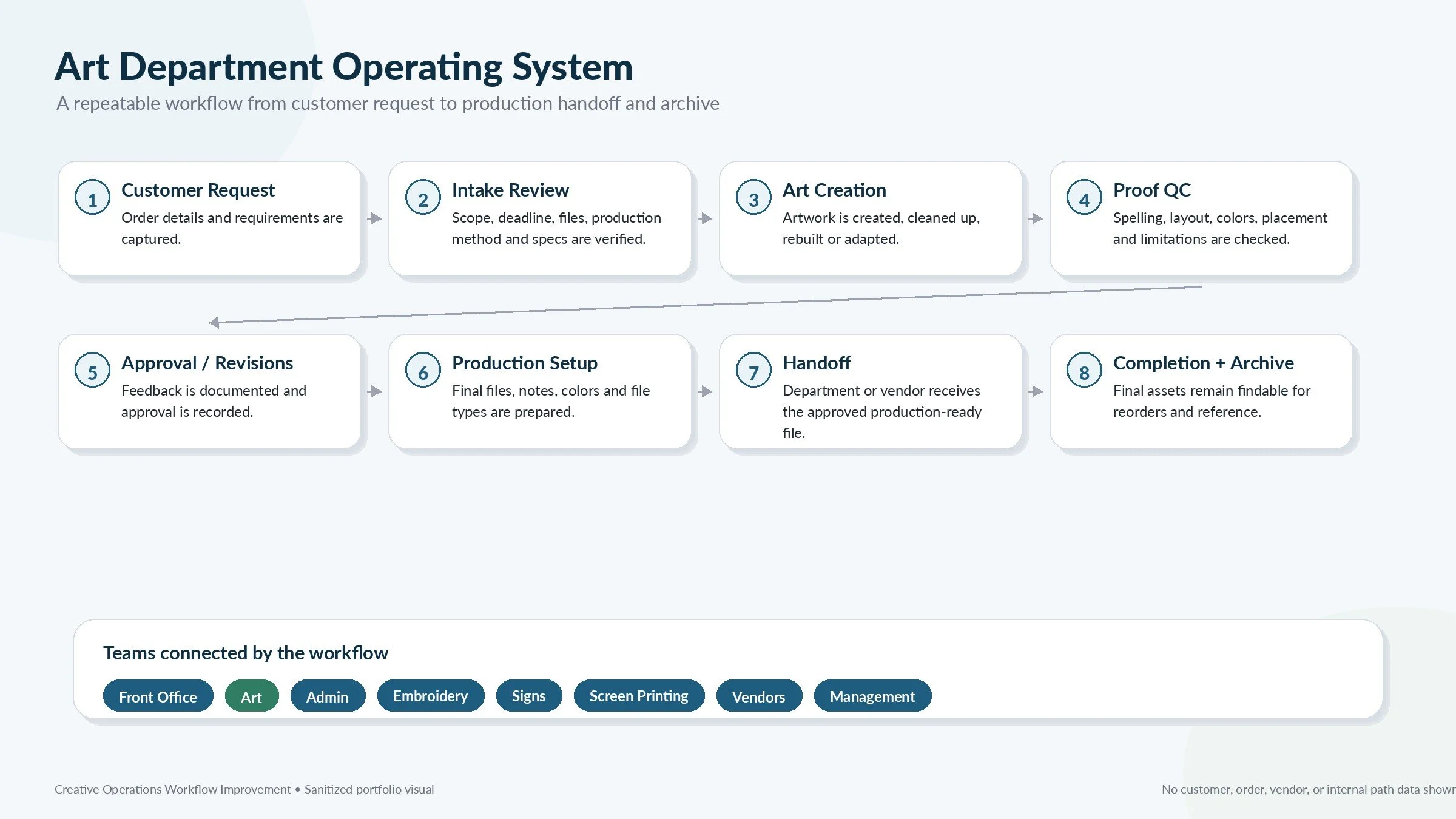
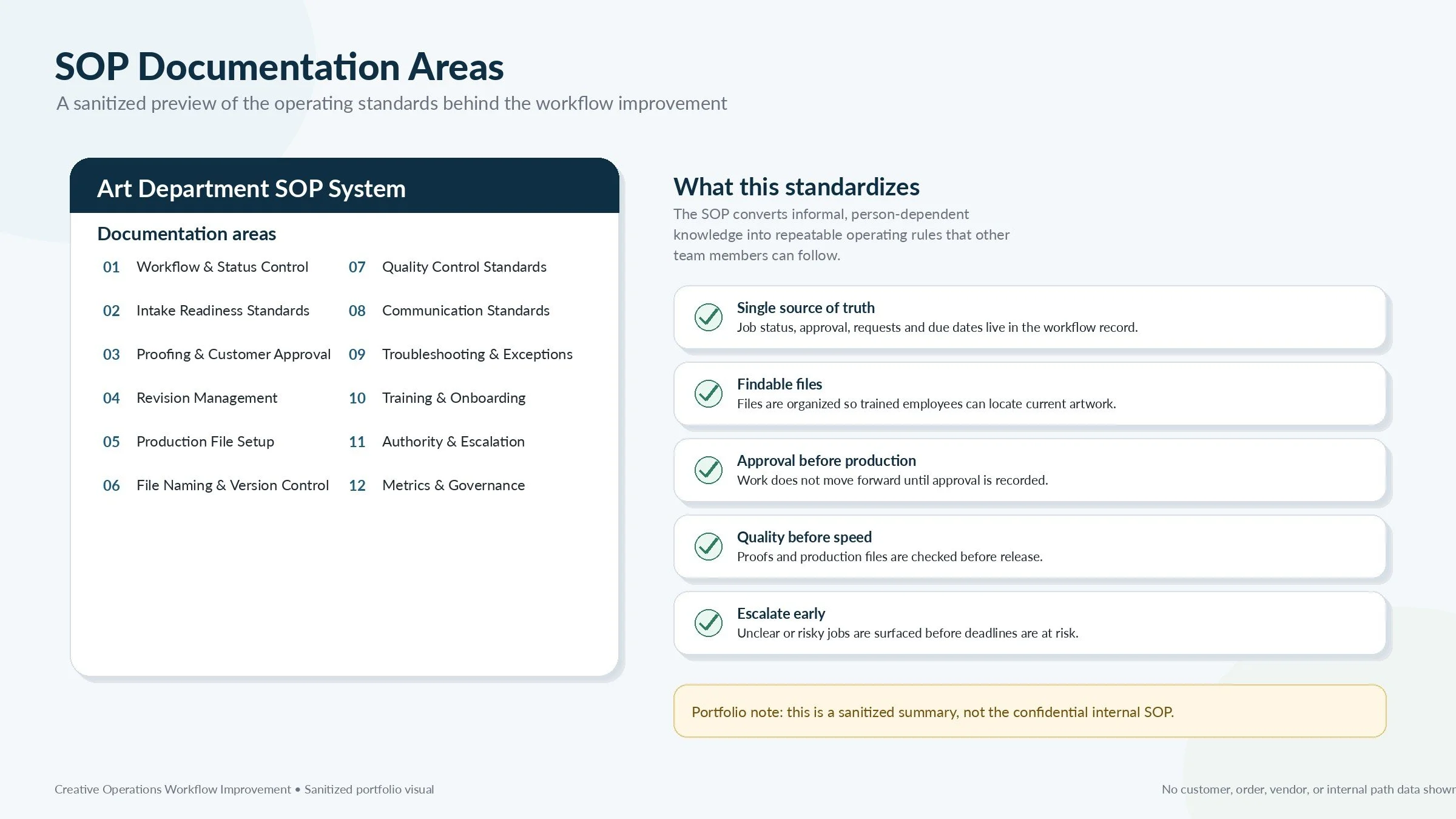
Note: SOP visuals and process examples shown here are sanitized portfolio samples. Customer names, vendor names, order numbers, internal file paths, login details, and proprietary production information have been removed.